
As temperatures across India continue to smash records, we’re all becoming more familiar with the basics of staying cool. We carry water bottles, seek out shade, and complain about the humidity. However, in my clinical practice, I’ve noticed a dangerous gap in public awareness. Most people know that heat causes dehydration-but very few realize that extreme heat is a direct cardiovascular threat.
Every summer, I sit across from patients who are surprised to learn that their “heat exhaustion” was actually a precursor to significant heart stress. The question I’m asked most frequently during these months is: “Can heatstroke actually cause a heart attack?”
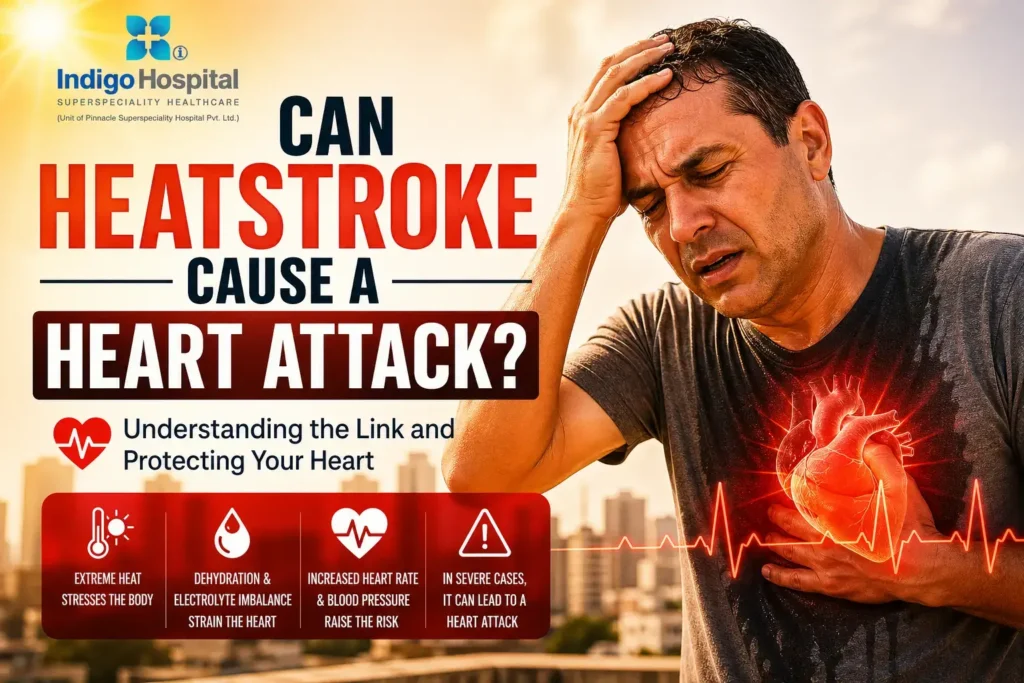
The answer is a definitive yes. In certain situations, heatstroke doesn’t just make you feel unwell; it creates a “perfect storm” that can lead to a myocardial infarction (heart attack).
In this comprehensive guide, I’ll walk you through the biological link between heat and heart ailment who is most at risk, and the specific warning signs that mean you need to stop what you’re doing and seek help immediately.
1. Understanding Heatstroke: More Than Just “Feeling Hot”
To understand the heart risk, we first have to understand what heatstroke actually is. It isn’t just a bad case of sweating.
Heatstroke is a medical emergency. It occurs when your body’s internal cooling mechanisms-primarily sweating and increased blood flow to the skin-fail completely. When your core body temperature rises above 40°C (104°F), your internal organs begin to suffer from thermal injury.
Common Causes I See in the Clinic:
- Classic Heatstroke: Occurring from prolonged exposure to high ambient temperatures, often seen in the elderly or those without air conditioning.
- Exertional Heatstroke: Caused by intense physical activity in the heat, frequently affecting outdoor workers, athletes, or fitness enthusiasts.
- Severe Dehydration: When you lose more fluid than you take in, your body loses the “coolant” it needs to regulate temperature.
Common Causes I See in the Clinic:
- Classic Heatstroke: Occurring from prolonged exposure to high ambient temperatures, often seen in the elderly or those without air conditioning.
- Exertional Heatstroke: Caused by intense physical activity in the heat, frequently affecting outdoor workers, athletes, or fitness enthusiasts.
- Severe Dehydration: When you lose more fluid than you take in, your body loses the “coolant” it needs to regulate temperature.
A balanced diet is a key element in maintaining heart health. Heart-healthy foods are rich in nutrients that promote cardiovascular wellness while lowering the risk of heart disease.
2. The Heart-Heat Connection: Why Your Heart Struggles
How exactly does a high temperature lead to a heart attack? Think of your heart as the engine of a car. When the outside temperature is 45°C, that engine has to work significantly harder to keep the car moving while simultaneously trying to prevent an overheat.
The Biological “Chain Reaction”:
- Increased Cardiac Output: To cool you down, your heart must pump massive amounts of blood toward the surface of your skin to release heat. This can increase your heart rate by 2-3 times its normal resting state.
- The “Thick Blood” Problem: As you dehydrate, the water content in your blood drops. Your blood becomes more viscous (thicker), making it harder to pump and significantly increasing the risk of a blood clot forming in the coronary arteries.
- Electrolyte Imbalance: Through heavy sweating, you lose essential minerals like sodium and potassium. These minerals are the “electrical wiring” for your heart. When they are out of balance, your heart can fall into a dangerous, irregular rhythm (arrhythmia).
Plaque Rupture: The systemic inflammation caused by heatstroke can cause existing fatty plaques in your arteries to become unstable and rupture, leading to an immediate blockage-the classic cause of a heart attack.
3. A Real Example from My Practice
Take the case of Mr. Murthy, a 52-year-old manager who decided to supervise an outdoor construction site for four hours during a Mumbai heatwave. He was drinking tea (a diuretic) instead of water and felt “flushed.”
By the time he reached my office, he was confused and complained of a fatigue and weakness . His toungue was totally dry showing severe dehydration and heart rate was high 128 per minute . Patients with pre-existing heart conditions like blockages or poor heart pumping are more prone to deleterious effects of such heat stroke and it is more important to manage them closely as many a times they also have water intake restriction .
The lesson? Never assume it’s “just the heat.”
4. Who Is in the “Danger Zone”?
While anyone can suffer from heatstroke, certain individuals are at a much higher risk for a secondary heart attack:
- Individuals with Pre-existing Heart Disease: If you already have narrowed arteries, the extra demand for blood flow can cause the heart muscle to starve for oxygen.
- The Elderly: The body’s ability to sweat and regulate temperature diminishes with age.
- Diabetics: Diabetes can affect the blood vessels and the body’s ability to sweat effectively.
- Outdoor Workers: Construction workers, delivery partners, and farmers in India are on the front lines of this risk.
- People on Certain Medications: Diuretics, beta-blockers, and even some antihistamines can interfere with how your body handles heat.
5. How to Protect Yourself: A Surgeon’s Advice
Prevention isn’t just about comfort; it’s about survival. Here is my “Summer Heart-Safety Checklist”:
- Hydrate Beyond Thirst: By the time you feel thirsty, you are already dehydrated. Aim for 3-4 liters of water a day if you are outdoors. Precaution : This is not for those with poor pumping or poor ejection fraction or heart failure diagnosis .
- Avoid “Heart-Stressing” Drinks: Alcohol and high-caffeine drinks (like strong coffee or energy drinks) increase your heart rate and dehydrate you further.
- The 11-to-4 Rule: Stay indoors during the peak intensity of the sun. If you must be outside, take a 10-minute break in the shade for every 30 minutes of work.
- Dress for the Climate: Wear loose, light-colored cotton. Synthetic fabrics trap heat against your skin, forcing your heart to work harder to cool you down.
- Monitor Your Urine: This is the easiest self-test. If your urine is dark (like apple juice), you are in the danger zone. It should be clear or light straw-colored.
6. What to Do in an Emergency
If you see someone collapsing in the heat or complaining of chest pain during a heatwave, every second counts.
- Move to Shade: Get them out of the sun immediately.
- Cool with available means : tarp is water bags or if available ice packs. Spray them with cool or normal temperature water .
- Positioning: Lay them flat with their legs slightly elevated to help blood flow back to the heart.
- No “Wait and See”: If they are confused or have chest pain, call for an ambulance immediately.
7. Why Choose Indigo Hospital for Cardiac and Heat Care?
At Indigo Hospital, we don’t just treat symptoms; we treat the whole person. Our emergency department is specifically trained to handle the complex intersection of environmental heat stress and cardiac emergencies.
Our Expert Facilities Include:
- 24/7 Cardiac Emergency Unit: Immediate access to ECG, Echo, and life-saving interventions.
- Advanced Electrolyte Monitoring: Rapid blood testing to correct imbalances before they cause arrhythmias.
- Patient-Centric Recovery: Led by specialists like Dr. Ashish Agrawal, our team focuses on empathetic care that ensures you understand your recovery path.
- Modern Infrastructure: State-of-the-art diagnostic tools to distinguish between simple heat exhaustion and serious heart injury.
Final Thoughts: Your Heart is Your Priority
So, can heatstroke cause a heart attack? Absolutely. But it is also largely preventable. By staying aware of the connection between the temperature outside and the pressure inside your chest, you can enjoy the summer safely.
Don’t wait for a crisis to happen. If you have a history of heart issues or have felt unusually fatigued during this heatwave, come in for a check-up.
Not feeling right after being in the sun?
Book a priority consultation or health check-up with our specialists today.
We’ll assess your heart health, check your hydration levels, and give you a personalized plan to stay safe this summer.
Best Cardiologist in Mulund, Mumbai
Dr. Ashish Agarwal | DM – Cardiology, MD – Medicine, MBBS
Dr Ashish Agrawal is a well-known name in the field of Cardiology. He is an interventional cardiologist by profession with over 16+ years of experience in this field. He plays an active role in all academic meetings. He has achieved a GOLD MEDAL in the post-doctoral DM Cardiology course, from the prestigious Institute of KEM Hospital and Seth G.S. Medical College, Mumbai.
