
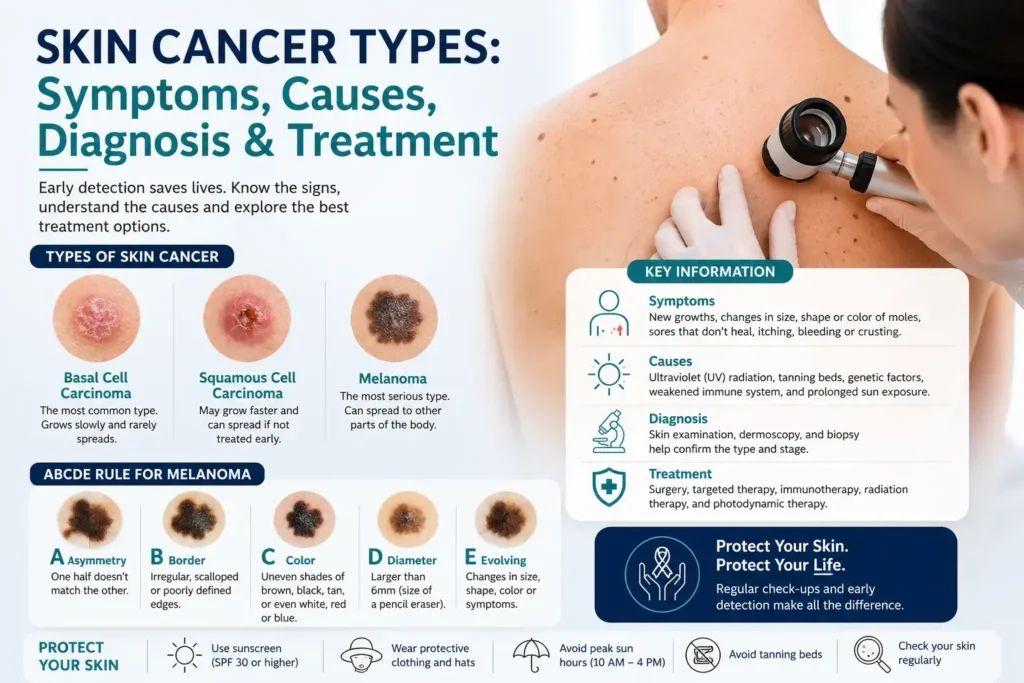
Skin cancer is one of the most common cancers worldwide and occurs when skin cells begin to grow abnormally. While prolonged exposure to ultraviolet (UV) rays is the leading cause, skin cancer can also develop due to genetic factors, weakened immunity, or previous radiation exposure. The good news is that most skin cancers are highly treatable when diagnosed early.
Knowing the different skin cancer types and their warning signs can help you seek medical attention before the disease progresses.
What is Skin Cancer?
Skin cancer develops when DNA damage causes skin cells to multiply uncontrollably. It commonly affects areas exposed to the sun, such as the face, neck, scalp, arms, and hands, although it can also occur on less exposed parts of the body.
Types of Skin Cancer
Basal Cell Carcinoma (BCC)
Basal Cell Carcinoma is the most common and least aggressive form of skin cancer. It grows slowly and rarely spreads but should still be treated promptly to prevent local tissue damage. It often appears as a shiny bump, a flat scar-like patch, or a sore that does not heal.
Squamous Cell Carcinoma (SCC)
Squamous Cell Carcinoma develops in the outer layer of the skin and is more aggressive than BCC. It may appear as a rough, scaly patch, a firm red nodule, or a persistent ulcer. If left untreated, it can spread to nearby tissues and lymph nodes.
Melanoma
Melanoma is the most serious among all skin cancer types because it can spread rapidly to other parts of the body. It usually develops from pigment-producing cells and often begins as a new mole or changes in an existing mole. Any mole showing changes in size, shape, colour, or border should be evaluated by a specialist.
Other Rare Skin Cancers
Less common forms include Merkel Cell Carcinoma, Cutaneous Lymphoma, and Dermatofibrosarcoma Protuberans (DFSP). Although rare, these cancers require prompt diagnosis and treatment by an experienced oncology team.
Symptoms of Skin Cancer
Symptoms vary depending on the type, but common warning signs include:
- A new or changing mole
- A sore that does not heal
- Persistent itching or bleeding
- A scaly or crusted skin lesion
- A rapidly growing lump on the skin
Any skin change that persists for several weeks should be examined by a doctor.
Causes and Risk Factors
Skin cancer develops due to damage to skin cells over time. Common risk factors include prolonged sun exposure, frequent sunburns, fair skin, increasing age, family history of skin cancer, weakened immunity, and exposure to tanning beds or certain chemicals.
Reducing UV exposure and protecting your skin can significantly lower the risk.
How is Skin Cancer Diagnosed?
Diagnosis begins with a clinical examination of the skin. If a suspicious lesion is found, your doctor may recommend a skin biopsy, where a small tissue sample is examined under a microscope. In some cases, imaging tests such as CT scans, MRI, or PET scans may be advised to determine whether the cancer has spread.
Treatment Options
Treatment depends on the type, size, location, and stage of the cancer. Common treatment options include:
- Surgical removal of the tumour
- Mohs surgery for selected skin cancers
- Radiation therapy
- Immunotherapy
- Targeted therapy for advanced melanoma
- Chemotherapy in selected cases
Early-stage skin cancers are often treated successfully with surgery alone.
Can Skin Cancer Be Prevented?
While not all cases are preventable, the risk can be reduced by protecting your skin from excessive UV exposure. Wear sunscreen with SPF 30 or higher, avoid prolonged sun exposure during peak hours, wear protective clothing, and perform regular skin self-examinations. Individuals with a higher risk should also schedule periodic skin screenings.
When Should You See a Doctor?
Consult a specialist if you notice a new skin growth, changes in an existing mole, a non-healing sore, or any persistent skin lesion that bleeds, itches, or changes in appearance. Early diagnosis greatly improves treatment outcomes.
Conclusion
Understanding the different skin cancer types is the first step toward early detection and timely treatment. While many skin cancers are highly curable when diagnosed early, delaying medical attention can allow the disease to progress. If you notice any unusual changes in your skin, seek evaluation from an experienced oncology team. At Indigo Hospital, our specialists provide comprehensive diagnosis, advanced treatment options, and personalised care to help patients achieve the best possible outcomes.
Indigo Hospital
2nd Floor, Marathon Millennium, Lal Bahadur Shastri Marg, Beside Nirmal Lifestyle Mall, Moti Nagar, Mulund Colony, Mulund West, Mumbai, Maharashtra 400080
Phone: +91 93727 23701
Reach Us: https://share.google/nXBN0sPXJVFYjgCEU
Frequently Asked Questions
What are the main types of skin cancer?
The three most common skin cancer types are Basal Cell Carcinoma (BCC), Squamous Cell Carcinoma (SCC), and Melanoma. While BCC and SCC are generally easier to treat when detected early, Melanoma is more aggressive and requires prompt medical attention.
What are the early signs of skin cancer?
Early signs may include a new mole, changes in the size or colour of an existing mole, a sore that does not heal, persistent itching, bleeding, or a scaly patch on the skin. Any unusual skin change should be evaluated by a doctor.
What causes skin cancer?
The most common cause is prolonged exposure to ultraviolet (UV) rays from the sun or tanning beds. Other risk factors include fair skin, family history, increasing age, weakened immunity, and previous radiation exposure.
Is skin cancer curable?
Yes. Most skin cancers can be treated successfully if diagnosed early. Early detection often allows for less invasive treatment and better outcomes.
How is skin cancer diagnosed?
A doctor first performs a physical examination of the affected skin. If cancer is suspected, a skin biopsy is usually performed to confirm the diagnosis. Imaging tests may be recommended if there is concern that the cancer has spread.
What are the treatment options for skin cancer?
Treatment depends on the type and stage of the cancer. Common options include surgery, Mohs surgery, radiation therapy, immunotherapy, targeted therapy, and, in some cases, chemotherapy.
Can skin cancer be prevented?
Although not all cases are preventable, you can reduce your risk by using sunscreen, avoiding excessive sun exposure, wearing protective clothing, and scheduling regular skin examinations if you are at higher risk.
When should I consult a doctor for a suspicious skin lesion?
You should seek medical advice if you notice a new or changing mole, a sore that doesn’t heal, a lesion that bleeds or itches, or any skin growth that changes in size, shape, or colour over time. Early evaluation can lead to timely diagnosis and effective treatment.
